5.3 Key public views and vistas
Policy DES3: Tall buildings
Planning permission will be granted for tall buildings, defined as any building 35m above ordnance datum (AOD) or taller or those which are significantly higher than their surroundings, where they:
- (c) Respect key public views and vistas within, across, into and out of the city, including important views of landmark buildings and landscape features.
5.3.1 When assessing proposals for tall buildings, consideration needs to be given to any impact the development may have on key public views and vistas from short, medium and long range. The siting of a tall building can present opportunities to create a point of focus within the urban environment which contributes positively to the legibility of the city and aids orientation. However, care needs to be taken to ensure that key public views are protected.
5.3.2 Well-designed tall buildings on prominent sites can play a role in acting as visual markers that help to open up, enclose, frame or terminate key views and visual axis. However, achieving a view terminus will not in itself provide planning justification for the siting of a tall building. While Belfast does not as yet benefit from having a formalised range of protected views, key views and vistas in this context will include (but not be limited to) views to and from key listed buildings as well as views from strategic public vantage points across the city including from public realm, civic spaces, parks, pedestrian bridges and the city’s waterfront area.
5.3.3 In the absence of formalised key views and vistas across Belfast, any impact on views and vistas will be assessed on a case by case basis. This will require a detailed assessment of how the building sits within the wider context of the city, most likely by way of 3D modelling and verified visual montages, to fully understand if it obstructs or intrudes on what is considered a key view or vista. Where it is deemed that a tall building may assist in opening up, enclosing, framing or terminating important views, the height, scale, siting, form, proportions, massing and detailed design of the building should be examined to ensure that these views are enhanced.
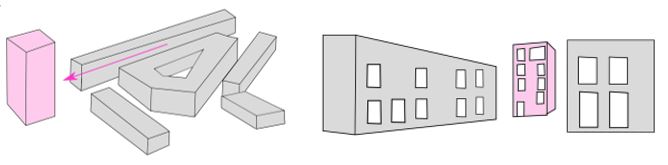
Image 18: Tall buildings as wayfinding elements
Diagrams illustrate how taller buildings can act as reference points and visual stops within the urban environment, terminating local and long-range views.
Images 19 and 20: Views north along Oxford Street and south east along Fredrick Street
The Obel, comprising an 85m high tower and lower podium, provides a visual stop by terminating views north along Oxford Street and south east along Great Patrick Street.
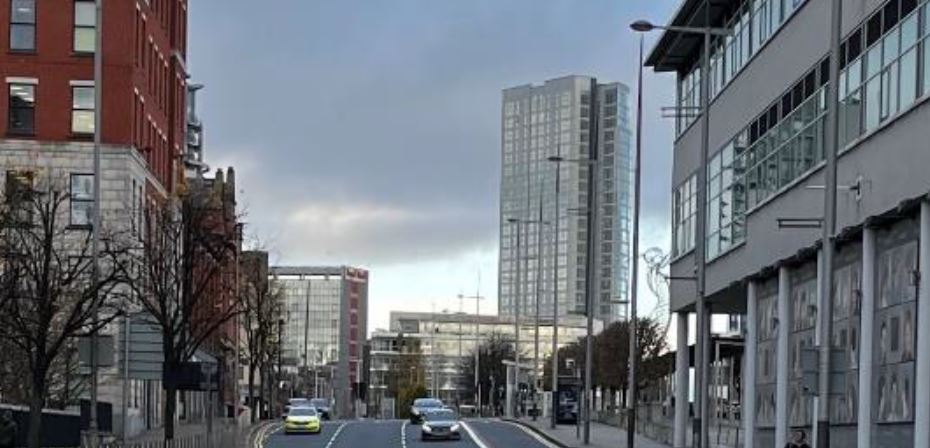
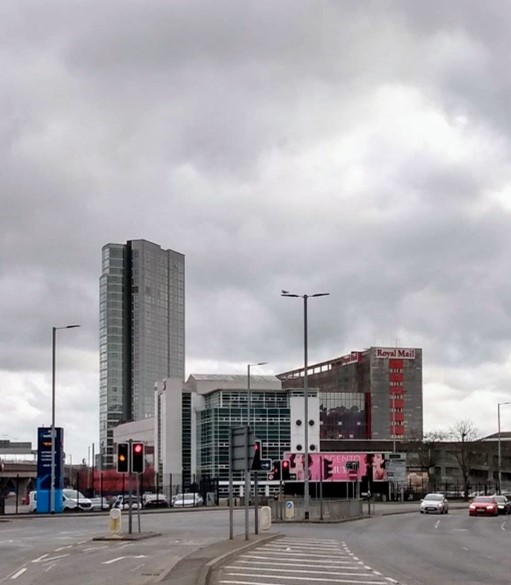
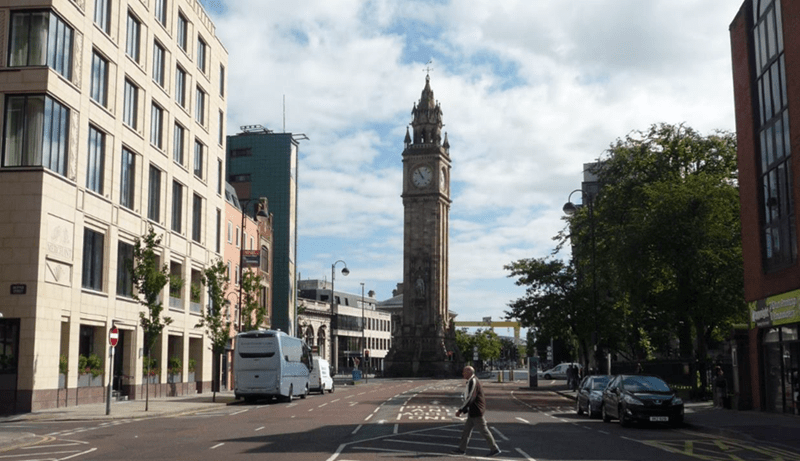
Image 21: View east along High Street
The Albert Memorial Clock (43m) terminates views east along High Street and provides an important historic reference point along one of the city’s key vistas which extends to the river and listed cranes.