


R13 Tree Risk Management
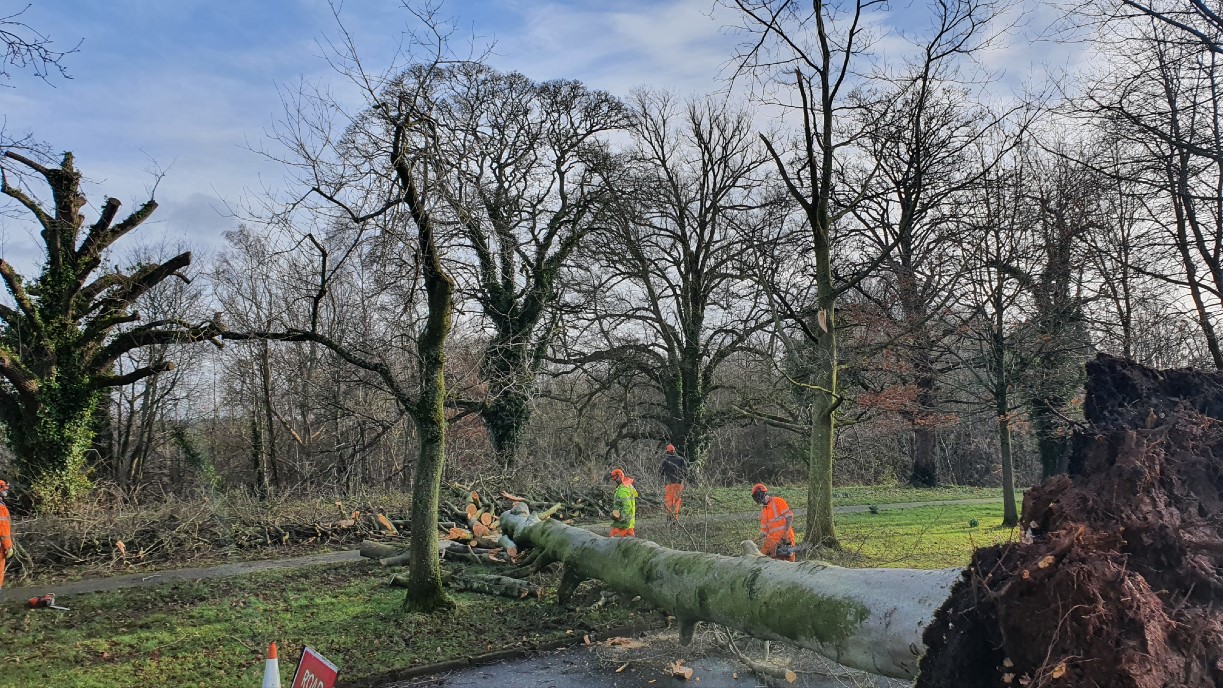
Risk management is vital in an urban setting; the number of people interacting with trees on a daily basis increases the likelihood of incidents involving trees. Risks of trees include falling branches, toxic/poisonous leaves, berries seeds etc., pollen (inducing hay-fever), roots uplifting pavements (trip hazards) and pests (i.e. Oak processionary moth).
These risks must be assessed and a strategy implemented to minimise the risk to people. Naturally, one of the best ways to reduce risk is to avoid certain situations during species selection and planting. Avoid planting trees with toxic fruits in areas frequented by children and dog-walkers. Some pests can be eliminated before they become a problem using pesticides/fungicides and biological controls. Giving trees a reasonable amount of space and deep soil around the base to allow roots to spread comfortably will reduce the likelihood of upheaval.
Existing trees and new plantings should be monitored to spot these issues early and prevent any further risks developing. A system should be implemented to ensure that all trees have a routine assessment at regular intervals, and methods of risk reduction and management are well known and well executed. Zoning is a practice whereby landowners and managers define areas of land according to levels of use. This prioritises the most used areas, and contributes to a cost-effective approach to tree inspection, focusing resources where most needed. Inspection methods and frequency may vary depending on whether the management strategy is intensive or extensive.
Further detail on Tree risk management can be found in Appendix V.
Sources and references
National Tree Safety Group. (2011). Common sense risk management of trees. Forestry Commission
Actions
- BCC to move from a 5 year to 3 year inspection cycle.
- Subject to DFI approval, street tree surveys will move from a 5 year to a 2 year inspection cycle.
Relevant corporate policies
| Priority | Responsibility for action | For review |
|---|---|---|
| Low | 1-2. Belfast City Council and Department for Infrastructure | TBC - Medium term project |
| Current Performance Level | Performance Indicators | |||
|---|---|---|---|---|
| Optimal | Low | Moderate | Good | Optimal |
| No tree risk assessment or risk management program. Response is on a reactive basis only. | Level I (limited visual assessment) inspection and follow-up conducted periodically | Level II (basic assessment) conducted periodically, resulting in scheduled follow-ups. | Level II (basic assessment) conducted routinely, according to defined cycle and intensive follow-up (i.e., priorities and timelines for mitigation established based on the characterisation of risk). | |
