


T10 Wider Environmental Considerations
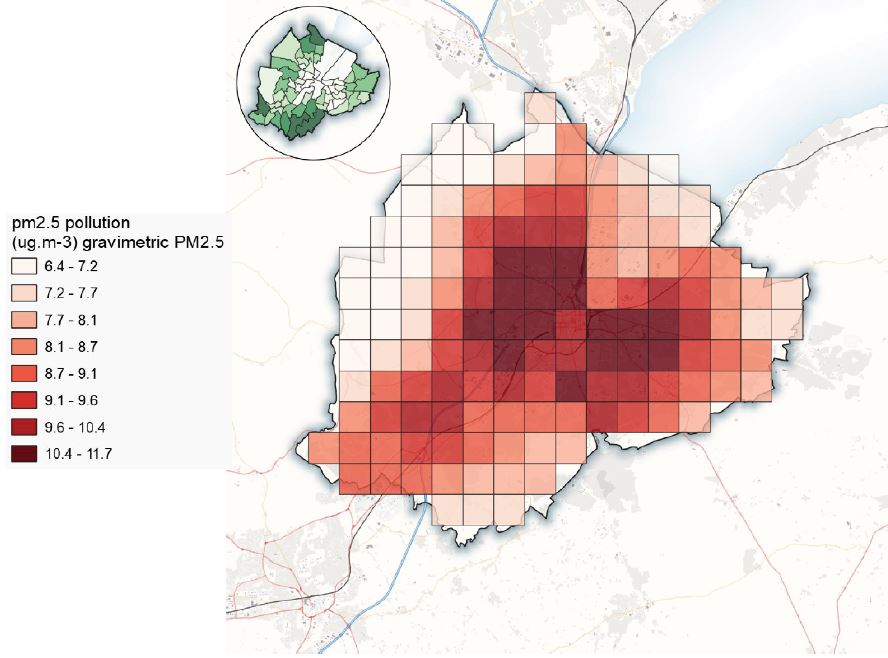
Belfast's urban forest has a vital part in the fight against climate change and can be part of both adaptation and mitigation strategies. Urban trees and woodlands are particularly important as a way of reducing the urban heat island effect, and in removing air pollution from built-up areas and highways. In certain situations, trees can also reduce the energy use of buildings by providing shade in summer (reducing the need for air conditioning) and insulation from cold winds in winter (reducing the heating costs).
With the UK target of carbon net neutrality by 2050, and Belfast's aims to achieve 66 per cent reductions on its 2000 level of emissions by 2025, 80 per cent by 2030, 88 per cent by 2035, 93 per cent by 2040, 97 per cent by 2045 and 100 per cent by 2050, the trees and other elements of the urban forest in Belfast are key.
Climate change poses a direct risk to the residents in Belfast; a warming climate increases risk of heatstroke, while increased rainfall will cause more frequent and more severe flooding. Biodiversity is also at risk, as species will struggle to adapt to warming climates, earlier springs and mild winters.
These considerations should be taken into account when managing the urban forest to ensure that the correct management practices are being enforces, tree and shrub species are as suitable to the future environment as possible, and that biodiversity is protected and enhanced, with biodiversity net gain as a key drive. Monitoring species and numbers will be important, and considering opinions from outside groups regarding more specific systems and locations will be key to preserving existing environments in Belfast. Working with the most up to date and location relevant climate and weather data is important to avoid generalisations and achieve the best results for the future.
Figure 9: Pollution of Particulate Matter <2.5 microns concentration across Belfast (Inset: Canopy Cover by Ward)
Source: UKAIR website (opens in a new window)
Contains public sector information licensed under the Open Government Licence v3.0.
Contains OS data © Crown copyright and database right 2022.
© OpenStreetMap contributors
Actions
- Complete an urban forest risk assessment to assess the risk from Flooding, Climate change, Pest and Diseases and others.
Relevant corporate policies
- Belfast Open Spaces Strategy
- Belfast Metropolitan Transport Plan
- Belfast Green and Blue Infrastructure Plan
| Priority | Responsibility for action | For review |
|---|---|---|
| Medium | 1. Belfast City Council with support from others | TBC - Medium term project |
| Current Performance Level | Performance Indicators | |||
|---|---|---|---|---|
| Moderate | Low | Moderate | Good | Optimal |
| No consideration/information that relates urban trees to climate change, air quality, water. | Some consideration of environmental aspects in relation to urban trees, e.g. looking at climate change. | Consideration of at least major environmental aspects in relation to urban trees. | Full consideration of environmental aspects in relation to trees, based on comprehensive, state-of-the-art information. | |
