


R14 Biosecurity
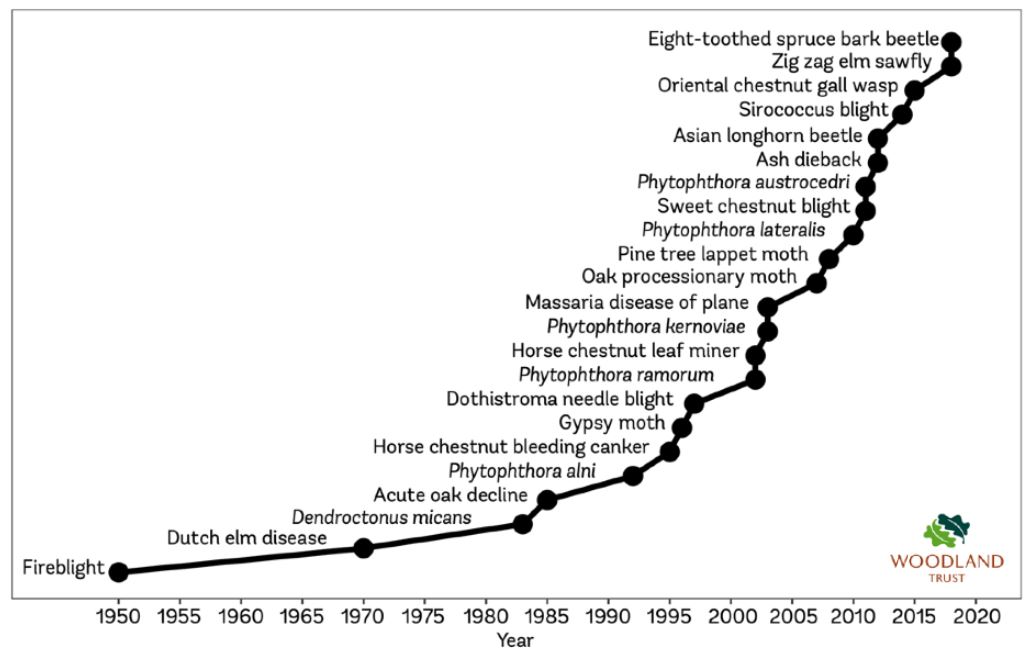
Biosecurity refers to the need to prevent new pests and diseases being introduced into the UK from abroad. This measure is necessary to stop the spread of potentially devastating organisms and protect forestry, agriculture and horticulture. In recent history, the introduction of Dutch Elm Disease (Ophiostoma novo-ulmi) killed 20 million mature English elm trees between its introduction in the late 1960’s and 1980. By 1990, this figure had risen to 25 million, over 85 per cent of the British population. Now, Ash Dieback (Hymenoscyphus fraxineus) is sweeping through the country and will likely kill off 80 per cent of ash trees across the UK. In Belfast 11.3 per cent of trees would be vulnerable to Ash Dieback with an amenity value worth £242 million. Greater intra-diversity in Belfast’s tree population would make the urban forest more resilient to loosing such a valuable resource.
These diseases and others will continue to have a profound effect on trees and woodlands in NI. Native tree species provide vital habitat for many other species and without them there would be a huge ecological deficit.
The importation of trees, particularly large landscape trees, from across Europe and elsewhere can increase the risk of diseases being introduced to the UK. The Plant Health Regulation and Official Controls Regulation imposed by DAERA provides information and guidance in relation to management and reduction of impacts from pests and diseases within NI. Stringent importation rules are in place to attempt to mitigate this risk factor, and actions needed to protect plant health are set out in ‘The Plant Health (Official Controls and Miscellaneous Provisions) Regulations (Northern Ireland) 2020’. (opens in a new window)
Belfast must take responsibility for the sourcing of its trees, and actively work to eliminate pests and diseases from its urban forest and prevent new diseases becoming prolific.
Figure 20: Tree pest and disease introduction in the UK
Sources and references:
Brasier, C.M., 1996. New horizons in Dutch elm disease control;
Defra, 2014; Defra, 2018. A Green Future: Our 25 Year Plan to Improve the Environment;
The Woodland Trust: State of the UK’s Woods and Trees 2021.
Actions
- BCC will follow current Biosecurity best practice for the urban forest; and will continue to ensure that biosecurity measures are included in all tenders for supply of trees.
- Support local community tree nurseries and seed collection.
Relevant corporate policies
| Priority | Responsibility for action | For review |
|---|---|---|
| Medium | 1-3. Belfast City Council | TBC - Medium term project |
| Current Performance Level | Performance Indicators | |||
|---|---|---|---|---|
| Moderate | Low | Moderate | Good | Optimal |
| No biosecurity strategy nor actions in place for urban trees | Some consideration of biosecurity aspects, e.g., through pest management. | Biosecurity management actions are integrated in urban forestry. | Biosecurity strategy developed and implemented, with emphasis on urban trees. Integration of this into day-to-day urban forest management. | |
