


R8 Tree Establishment Planning and Implementation
Tree planting is more complex than most people realise; it is more than simply sticking trees in the ground. In order to ensure the trees survive, thrive and reach their full potential in cities, the right tree species must be selected, be planted in the right place, be planted for the right reasons, and planted and maintained in the right way. This way, the trees are given the best chance to survive and avoid being removed again further down the line.
Right reason - Tree planting should focus not just on quantity, but also quality. There is a big push to increase the number of trees planted, but if that is the only goal then how much good will it be when they don’t survive to maturity? Belfast wants to make sure that these trees can benefit future generations by mitigating climate change, improving biodiversity, and enhancing health and well-being. With this in mind, tree management and post-planting care is vital to reaching the goals of Belfast’s Tree Strategy.
Right place - Location is key when planting, particularly in cities where conditions can be less than ideal. Trees require space to grow, both above ground and below. Too close to a building and the tree may block light from windows or interfere with foundations causing subsidence, too close to another tree and there won’t be enough root space or enough light. Power lines, drains, pavements and roads can all be adversely affected if the tree isn’t given the space it needs.
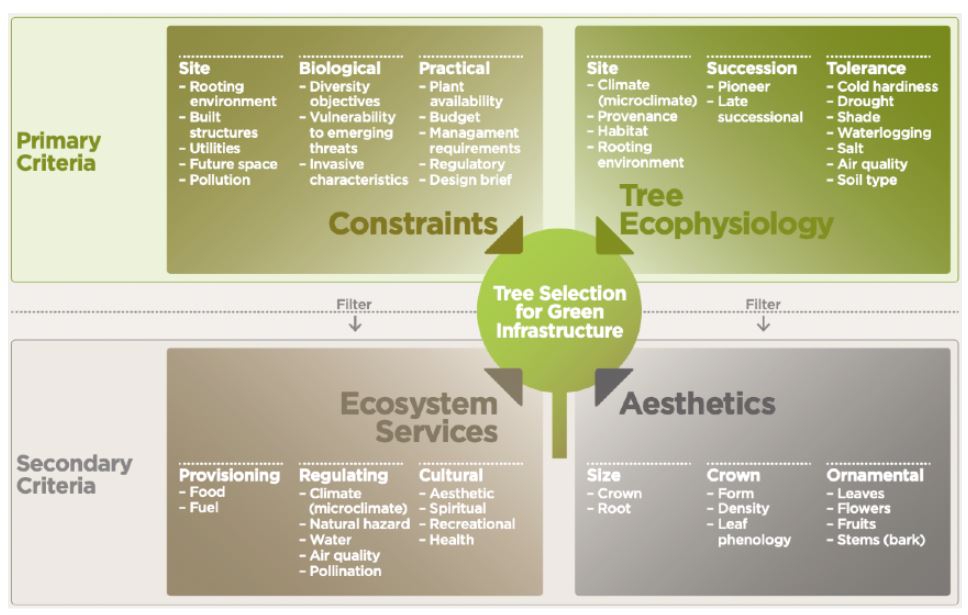
Right tree - The benefits and drawbacks of different species must be considered, including site suitability, climate tolerance, size, rooting characteristics, aesthetics (canopy, leaves, flowers, etc.), ecosystem service provision, biodiversity, and more.
Right way - How the tree should be planted may vary depending on where the tree is, but all trees need the same essentials; good soil volume for root establishment; water, particularly for young trees which may struggle in hot cities; air and support to keep it upright whilst its roots establish; protection from damage, and maintenance. Hard paved impermeable surfaces present challenges which trees are not adapted to deal with, such as soil compaction, nutrient recycling and reduced water infiltration. These issues should be considered to help establish a healthy, long-lasting urban forest.
Figure 17: Trees and Design Action Group species selection criteria guide
Sources and references
Trees and Design Action Group. (2018). Tree Species Selection For Green infrastructure : A Guide for Specifiers (opens in a new window).
Actions
- Complete a comprehensive prioritised tree planting plan and opportunity map.
- Draft up SMART targets for the planting plan including third party planting initiatives.
Relevant corporate policies
- UK’s Nationally Determined Contribution
- The UK Climate Change Act
- The 25 Year Environmental Plan
- Clean Air Strategy
| Priority | Responsibility for action | For review |
|---|---|---|
| Medium | 1. Belfast City Council | TBC - Short term project |
| Current Performance Level | Performance Indicators | |||
|---|---|---|---|---|
| Moderate | Low | Moderate | Good | Optimal |
| Little or no tree planting; tree establishment is ad hoc. | Some tree planting and establishment occurs, but with limited overall municipality-wide planning and post-planting care. | Tree planting plan is guided by municipality-wide goals, with some post-planting establishment care. | Comprehensive tree establishment plan is guided by needs derived from canopy and other assessments, maintains species and age diversity, includes both planting and young tree care, and is sufficient to make progress toward canopy cover objectives. | |
